

Petrol Price in Pakistan Today Decrease
Petrol Price in Pakistan Today Decrease Government of Pakistan has announced a major reduction in petroleum prices, bringing much-needed relief to millions of citizens. According to the latest announcement, the price of petrol has been reduced by Rs22 per litre, while high-speed diesel (HSD) has also become cheaper by the same amount. This is one of the biggest fuel price cuts seen in recent months and is expected to reduce transportation costs and ease financial pressure on households.
The latest reduction comes after another decrease in fuel prices during the previous week. With international oil prices showing a downward trend, the government has decided to pass on the benefit directly to consumers. People across Pakistan, especially daily commuters, transporters, and motorcycle owners, are expected to benefit from this development.

Government Announces Major Fuel Price Relief for Consumers
The federal government announced the latest fuel price reduction on Friday night. Prime Minister Shehbaz Sharif stated that providing relief to the public remains one of the government’s top priorities.
Many Pakistani families have been struggling with rising inflation and transportation expenses over the past few years. Fuel prices affect almost every sector of the economy, including transport, food distribution, agriculture, and industrial production. Therefore, a reduction in petroleum prices is considered positive news for both consumers and businesses.

Key points of the announcement include:
- Petrol price reduced by Rs22 per litre
- High-Speed Diesel (HSD) reduced by Rs22 per litre
- New prices became effective from May 30
- Kerosene oil prices were also reduced
- Relief expected for transport and logistics sectors
New Petrol and Diesel Rates Effective From May 30
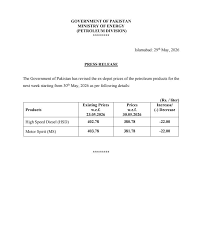
The new petroleum prices came into effect from Saturday, May 30. The Petroleum Division confirmed that the revised rates would remain applicable until the next weekly review.

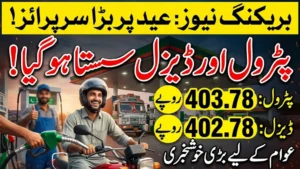
Before this announcement, petrol was being sold at Rs403.78 per litre, while diesel was available at Rs402.78 per litre. After the latest reduction, both fuels have become significantly cheaper.
Updated Fuel Prices Table
| Petroleum Product | Previous Price (Rs/Litre) | Reduction | New Price (Rs/Litre) |
|---|---|---|---|
| Petrol | 403.78 | 22 | 381.78 |
| High-Speed Diesel | 402.78 | 22 | 380.78 |
| Kerosene Oil | 313.44 | 41.44 | 272.00 |
The reduction is expected to provide immediate financial relief to consumers who rely on fuel for daily travel and business operations.
Why Did Petrol Prices Fall This Week?
The primary reason behind the latest reduction is the decline in international crude oil prices. Global oil markets have experienced lower prices in recent weeks, creating room for the government to reduce domestic fuel rates.
Pakistan imports a significant portion of its petroleum requirements. Whenever global oil prices decline, the government can revise local fuel prices accordingly. This time, international market conditions allowed authorities to provide a substantial reduction to consumers.
Several factors contributed to the decrease:
- Lower international crude oil prices
- Improved market stability
- Reduced pressure on global energy supplies
- Government decision to transfer relief to the public
Prime Minister Shehbaz Sharif’s Statement on Fuel Relief
Prime Minister Shehbaz Sharif emphasized that the government remains committed to supporting citizens during difficult economic conditions. According to the Prime Minister’s Office, the reduction fulfills a promise made to the public when space became available in petroleum pricing.
The prime minister highlighted that relief measures are aimed at helping ordinary Pakistanis who have been affected by inflation. He also noted that previous reductions in fuel prices had already provided some support to consumers.
The government believes that lower fuel prices can contribute positively to economic activity and reduce the burden on households.
Comparison Between Previous and Current Petrol Prices
Fuel prices have witnessed back-to-back reductions over the past two weeks. Last week, petrol and diesel prices were already reduced by approximately Rs6 to Rs7 per litre.
The latest decrease of Rs22 per litre is much larger and has brought fuel prices down considerably. This means consumers are now paying substantially less than they were paying just a few weeks ago.
Price Comparison Table
| Fuel Type | Price Before Recent Reductions | Current Price |
|---|---|---|
| Petrol | Above Rs425 per litre | Around Rs381 per litre |
| Diesel | Above Rs424 per litre | Around Rs380 per litre |
This difference can help households save a noticeable amount on monthly fuel expenses.
How the Rs22 Per Litre Reduction Will Benefit the Public
The reduction in fuel prices will directly benefit millions of Pakistanis. Lower fuel costs mean reduced spending on daily transportation, which can improve household budgets.
People who travel regularly for work, education, and business will notice immediate savings. Similarly, families using motorcycles and small vehicles can expect lower monthly fuel expenses.
Potential benefits include:
- Reduced transportation costs
- Better household savings
- Lower travel expenses
- Reduced burden on middle-income families
- Improved purchasing power
Impact on Daily Transportation Expenses
Petrol is the most commonly used fuel in Pakistan for motorcycles, cars, rickshaws, and small vehicles. Therefore, any reduction in petrol prices has a direct effect on daily life.
For salaried individuals who travel long distances every day, even a small reduction can make a difference. Since this reduction is Rs22 per litre, the savings can become significant over a month.
Many families are expected to experience relief in their transportation budgets, allowing them to allocate money toward other essential expenses.
Relief for Motorcycle, Rickshaw and Small Vehicle Owners
Motorcycles remain the primary mode of transportation for millions of Pakistanis. Rickshaw drivers and small vehicle owners also depend heavily on petrol.
The latest reduction is particularly beneficial for:
- Motorcycle riders
- Ride-hailing drivers
- Rickshaw operators
- Small business owners
- Daily wage earners
These groups spend a large portion of their income on fuel. Lower petrol prices can improve their financial situation and reduce operating costs.
Effect of Diesel Price Cut on Transport and Goods Delivery
High-Speed Diesel is mainly used by heavy transport vehicles, trucks, buses, and commercial machinery. When diesel prices decrease, transportation companies can reduce operating expenses.
Since goods are transported across Pakistan using diesel-powered vehicles, lower diesel prices may help reduce logistics costs. This can eventually support price stability in various sectors.
Industries likely to benefit include:
- Freight transport
- Public transport
- Agriculture
- Manufacturing
- Construction
New Kerosene Oil Price and Consumer Benefits
Along with petrol and diesel, the government also reduced kerosene oil prices. The price of kerosene has dropped from Rs313.44 per litre to Rs272 per litre.
Kerosene remains an important fuel source in some rural and remote areas of Pakistan. Families that rely on kerosene for cooking, heating, and lighting can benefit from the lower rates.
The reduction may also help lower energy-related expenses for lower-income households.
Weekly Petroleum Price Review System Explained
Pakistan currently reviews petroleum prices on a weekly basis. The government assesses international market trends and adjusts local prices accordingly.
This system allows authorities to respond quickly to changes in global oil prices. If international prices rise, domestic rates may increase. Similarly, when global prices decline, consumers can receive relief through lower fuel prices.
The weekly review mechanism aims to maintain transparency and ensure that market realities are reflected in local pricing.
Role of Global Oil Market in Pakistan’s Fuel Prices
Pakistan’s fuel prices are closely linked to international oil markets. Since the country imports petroleum products, global price fluctuations directly affect local rates.
Factors that influence fuel prices include:
- International crude oil prices
- Currency exchange rates
- Import costs
- Shipping expenses
- Government taxes and levies
Whenever global oil prices decrease, there is a possibility of reduced fuel prices in Pakistan.
How Lower Fuel Prices Can Affect Inflation
Fuel prices play a major role in determining inflation levels. Transportation costs influence the prices of food, consumer goods, and essential services.
A decrease in fuel prices can:
- Lower transportation expenses
- Reduce delivery costs
- Support businesses
- Improve consumer confidence
- Help control inflationary pressure
Although fuel price reductions do not instantly lower all prices, they can contribute to broader economic relief over time.
Expected Impact on Household Budgets
Many Pakistani households allocate a large portion of their monthly income to transportation. The latest reduction can help families manage their finances more effectively.
For households with motorcycles or cars, monthly fuel savings can become significant. These savings may be redirected toward education, healthcare, groceries, or utility bills.
The reduction also brings positive sentiment among consumers who have faced continuous inflationary challenges in recent years.
Key Highlights of the Latest Petroleum Price Notification
Here are the most important updates from the latest announcement:
- Petrol price reduced by Rs22 per litre
- Diesel price reduced by Rs22 per litre
- Kerosene price reduced significantly
- New rates effective from May 30
- Relief aimed at consumers and transport sectors
- Reduction follows an earlier cut in fuel prices
- Government cites lower international oil prices as the main reason
Important Facts Every Consumer Should Know
Consumers should stay informed about petroleum price announcements because fuel costs impact daily life and household expenses.
Important facts include:
- Fuel prices are reviewed weekly
- International oil markets influence local rates
- Petrol mainly affects private transport users
- Diesel impacts goods transportation and industry
- Further price changes depend on global market trends
FAQs
What Is the New Petrol Price in Pakistan?
After the latest reduction of Rs22 per litre, the new petrol price stands at approximately Rs381.78 per litre.
What Is the New High-Speed Diesel Price?
The new diesel price is approximately Rs380.78 per litre following the latest government announcement.
When Did the New Fuel Prices Become Effective?
The revised petroleum prices became effective from May 30 and will remain applicable until the next review.
Why Are Petroleum Prices Being Revised Every Week?
The government reviews petroleum prices weekly to reflect changes in international oil markets and provide timely adjustments for consumers.

Final Thoughts
The latest reduction in petrol and diesel prices is welcome news for Pakistani consumers. With petrol and diesel becoming cheaper by Rs22 per litre, households, transporters, businesses, and daily commuters are expected to experience noticeable financial relief.
While future fuel prices will depend on international market conditions, the current reduction offers an opportunity for consumers to benefit from lower transportation costs. For millions of Pakistanis dealing with inflation and rising living expenses, this announcement provides much-needed support and optimism for the weeks ahead.