
HSD Price Change Notification
HSD Price Change Notification federal government has announced a fresh reduction in petroleum prices ahead of Eid ul Azha 2026, bringing some relief to inflation-hit citizens across Pakistan. The latest petrol price reduction and diesel price cut were officially announced through a notification issued by the Ministry of Energy. This decision has come at a time when millions of Pakistanis are preparing for Eid travel, animal transportation, shopping, and increased business activities.
For the past several months, rising fuel prices have badly affected the budgets of ordinary citizens. Transport fares increased, food prices went higher, and small businesses struggled to manage daily expenses. People using motorcycles for jobs, office work, delivery services, and daily commuting were especially under pressure due to continuously expensive petrol rates. In rural areas, farmers were also facing difficulties because diesel prices directly impact agricultural costs, tube wells, tractors, and transportation of crops.

Now, after the latest reduction in petrol and High-Speed Diesel (HSD) prices, there is fresh hope that transportation expenses may slightly decrease before Eid ul Azha. Although fuel prices in Pakistan are still historically high, even a small reduction matters for middle-class and lower-income families already struggling with inflation, electricity bills, and rising household expenses.
Government Announces New Petrol And Diesel Prices In Pakistan
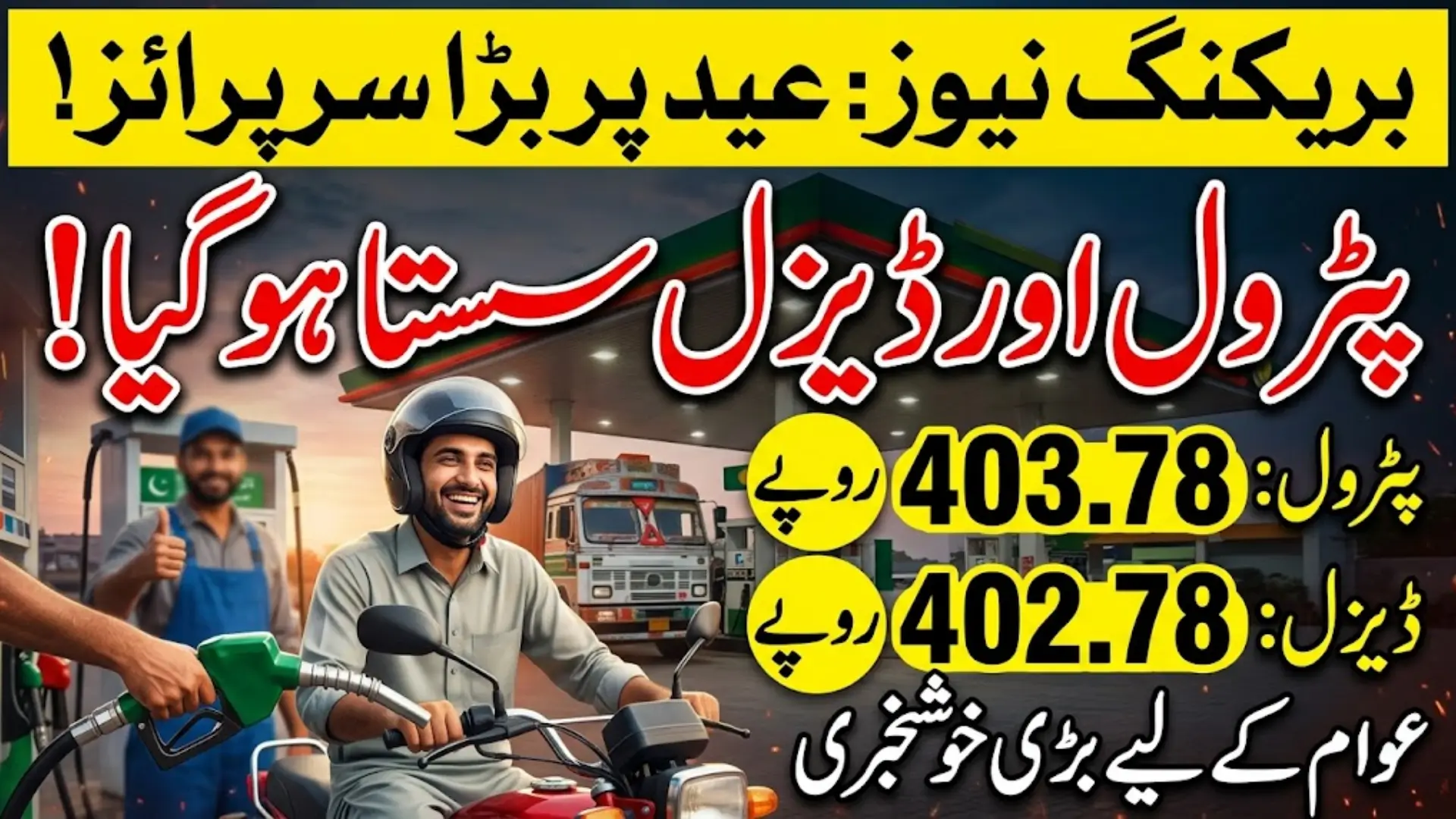
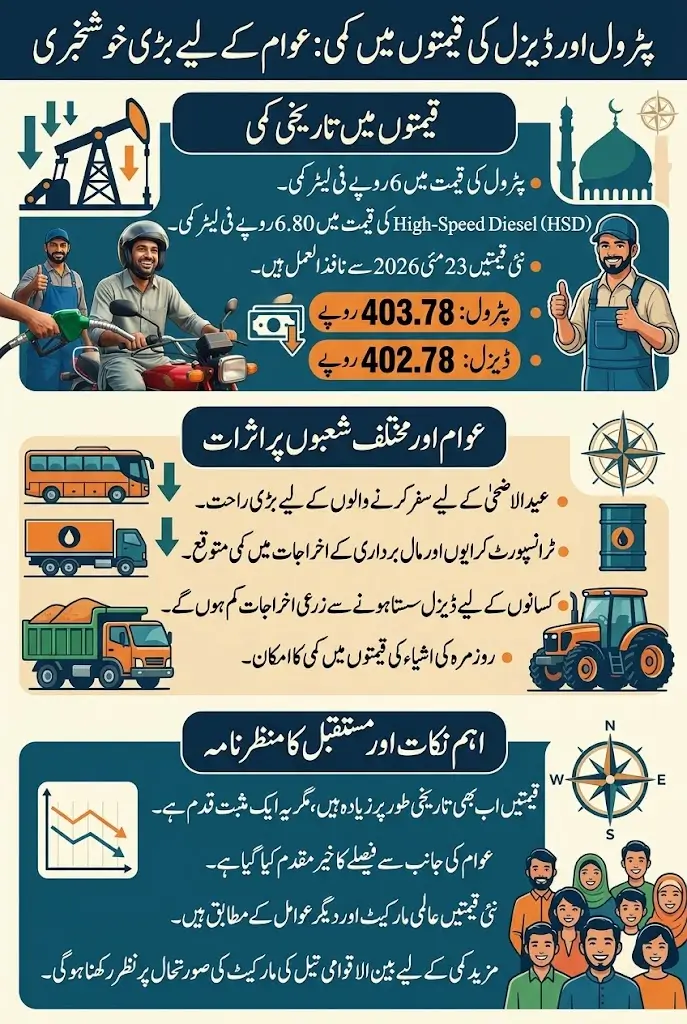
According to the official petroleum notification, the government has reduced the price of High-Speed Diesel by Rs6.80 per litre. After this reduction, the new HSD price has reached Rs402.78 per litre instead of the previous Rs409.58 per litre. At the same time, petrol prices have also been reduced by Rs6.00 per litre, bringing the new petrol rate down to Rs403.78 per litre from Rs409.78.

The revised petroleum prices came into effect from May 23, 2026. This announcement immediately became a major topic of discussion across Pakistan because fuel prices affect almost every sector of daily life. Whenever petrol or diesel prices increase, transport fares, food delivery charges, and market prices also rise. Similarly, when fuel prices decrease, people expect some reduction in transportation and logistics costs.
The government usually reviews petroleum prices after considering international oil market trends, import costs, and currency exchange rates. In recent weeks, fluctuations in global crude oil prices created expectations that Pakistan might announce relief for consumers before Eid ul Azha. This latest reduction has partially fulfilled those expectations.
Latest Petroleum Prices In Pakistan 2026
| Petroleum Product | Previous Price | New Price | Reduction |
|---|---|---|---|
| Petrol | Rs409.78 | Rs403.78 | Rs6.00 |
| High-Speed Diesel (HSD) | Rs409.58 | Rs402.78 | Rs6.80 |
Important highlights from the latest notification include:
- Petrol price reduced by Rs6 per litre
- HSD price reduced by Rs6.80 per litre
- New prices effective from May 23, 2026
- Relief announced before Eid ul Azha
- Transport and agriculture sectors expected to benefit
Eid Ul Azha Travel Season Increases Fuel Demand Across Pakistan
Every year before Eid ul Azha, fuel demand rises sharply across Pakistan because millions of people travel from major cities to their hometowns and villages. Bus terminals become crowded, highways remain busy day and night, and transport companies arrange additional vehicles to handle increased passenger traffic. At the same time, livestock transportation from rural areas to urban cattle markets also reaches its peak during this season.
This year, citizens were already worried about high inflation, expensive sacrificial animals, rising transport fares, and increasing grocery prices. Many families feared that travelling during Eid holidays would become even more difficult due to expensive fuel rates. Therefore, the latest reduction in petrol and diesel prices has provided some breathing space before one of the busiest travel seasons of the year.
Commercial activities also increase significantly before Eid ul Azha. Traders transport animals, food supplies, clothes, and household items from one city to another. Delivery services, cargo companies, and transport operators all depend heavily on diesel and petrol. Because of this, even a small reduction in fuel prices directly affects the movement of goods and people nationwide.
Major Eid-related activities affected by petroleum prices include:
- Intercity travel during Eid holidays
- Transportation of sacrificial animals
- Increased cargo and delivery operations
- Public transport movement between cities
- Business supply chain activities
- Daily travel expenses for families
HSD Price Reduction May Bring Relief To Transporters And Farmers
High-Speed Diesel is considered one of the most important fuels in Pakistan’s economy because it powers heavy transport vehicles, trucks, buses, tractors, agricultural machinery, and tube wells. Whenever diesel prices rise, transportation costs also increase, which eventually affects the prices of vegetables, fruits, groceries, construction material, and other essential items.
The latest reduction in HSD prices is expected to benefit transporters who have been struggling with continuously increasing fuel costs over the past several months. Truck owners and bus operators believe this decision may help reduce operational expenses during the busy Eid season when transportation demand is already high. However, many transporters say more reductions are still needed because fuel prices remain above Rs400 per litre.
Farmers are also expected to receive some relief from lower diesel prices. Agriculture in Pakistan heavily depends on diesel-powered machinery, especially in rural areas where tractors and tube wells are essential for farming operations. Lower fuel expenses can help reduce cultivation costs and improve transportation of agricultural products from villages to urban markets.
People connected to these sectors may benefit the most:
- Truck and bus operators
- Farmers using tractors and tube wells
- Goods transport companies
- Cargo and logistics businesses
- Vegetable and fruit suppliers
- Construction material transporters
Petrol Price Cut Gives Relief To Motorcycle And Car Owners
Petrol is the most commonly used fuel among ordinary citizens in Pakistan because millions of people rely on motorcycles for daily transportation. Office workers, students, shopkeepers, factory workers, and delivery riders all feel the direct impact whenever petrol prices increase or decrease.
Over the past year, continuously rising petrol prices badly affected household budgets. Many families were forced to reduce unnecessary travel because commuting expenses became too expensive. Delivery riders and online service workers also complained that higher petrol prices were reducing their daily income and making it difficult to manage household expenses.
The latest reduction of Rs6 per litre may not look very large, but for lower-middle-class families, every rupee saved on fuel matters. Citizens travelling daily for work or education may now experience slight relief in monthly transportation expenses. Ride-hailing drivers and motorcycle delivery workers are also expected to benefit from lower petrol costs before Eid ul Azha.
Common advantages of petrol price reduction include:
- Reduced motorcycle fuel expenses
- Lower daily commuting costs
- Relief for office workers and students
- Better savings for middle-class families
- Lower delivery service operating costs
- Easier travel during Eid holidays
Fuel Prices Directly Affect Inflation In Pakistan
Petroleum prices play a major role in Pakistan’s inflation because transportation costs affect almost every product available in local markets. When diesel prices increase, traders spend more money transporting vegetables, fruits, flour, sugar, and groceries from farms and warehouses to cities. Those increased transportation expenses are eventually transferred to consumers through higher market prices.
Experts believe that the latest reduction in diesel prices could slightly reduce inflationary pressure if transporters and traders pass the benefit on to consumers. However, in Pakistan, market prices often take time to adjust even after fuel prices decrease. Citizens usually complain that prices increase immediately after petrol hikes but rarely decrease at the same speed when petroleum rates go down.
Inflation has already created serious difficulties for ordinary families. Electricity bills, utility charges, school expenses, and food prices remain extremely high. In such conditions, any reduction in petroleum prices becomes important because fuel costs influence the overall cost of living.
Important sectors linked with fuel-driven inflation include:
- Public transportation
- Food supply chains
- Agriculture and farming
- Cargo and logistics services
- Delivery and courier businesses
- Construction material transportation
Public Reaction After Petroleum Price Reduction Announcement
The latest petrol and diesel price reduction has generally received a positive response from citizens across Pakistan. Many people believe the government’s decision has come at the right time because Eid ul Azha expenses are already placing extra pressure on household budgets. Social media discussions also showed that citizens were expecting some relief before Eid due to changing international oil prices.
Transporters and farmers particularly welcomed the diesel price reduction because operating heavy vehicles and agricultural machinery has become extremely expensive in recent months. Some transport companies are now under public pressure to reduce bus fares for Eid travellers, although many operators have not yet officially announced any fare reduction.
Despite the positive reaction, many citizens still believe fuel prices remain too high for ordinary people. Petrol and diesel rates above Rs400 per litre continue to create financial pressure on middle-class and lower-income families. Public opinion suggests that further reductions in petroleum prices are necessary if the government wants to provide meaningful economic relief.
Public expectations after the latest fuel price cut include:
- Reduction in transport fares
- Lower prices of daily-use items
- Relief in business transportation costs
- Better support for farmers
- More petroleum price reductions in future
Important Information Citizens Should Remember
The revised petroleum prices officially came into effect from May 23, 2026. Citizens are advised to follow official government notifications instead of trusting unverified social media posts or rumours regarding petrol and diesel prices.
People planning Eid travel should also monitor transport fares because some transport companies may adjust ticket prices after the reduction in diesel costs. Similarly, business owners and transporters may review delivery charges depending on fuel consumption and operational expenses.
Key points every citizen should know:
- Petrol price reduced to Rs403.78 per litre
- HSD price reduced to Rs402.78 per litre
- Revised rates effective from May 23, 2026
- Eid ul Azha travel expected to increase fuel demand
- Fuel prices still remain historically high in Pakistan
Conclusion
The latest HSD and petrol price reduction before Eid ul Azha 2026 has brought temporary relief for millions of Pakistanis struggling with inflation and rising living costs. The government’s decision is expected to support transporters, farmers, delivery workers, traders, and ordinary citizens who depend on fuel for daily travel and business activities.


Although the reduction may not completely solve economic problems, it can still reduce pressure on transportation expenses during the busy Eid season. Lower diesel prices may also help improve goods transportation and agricultural operations across the country. For middle-class families already facing expensive groceries, utility bills, and travel expenses, even small fuel relief is considered important.